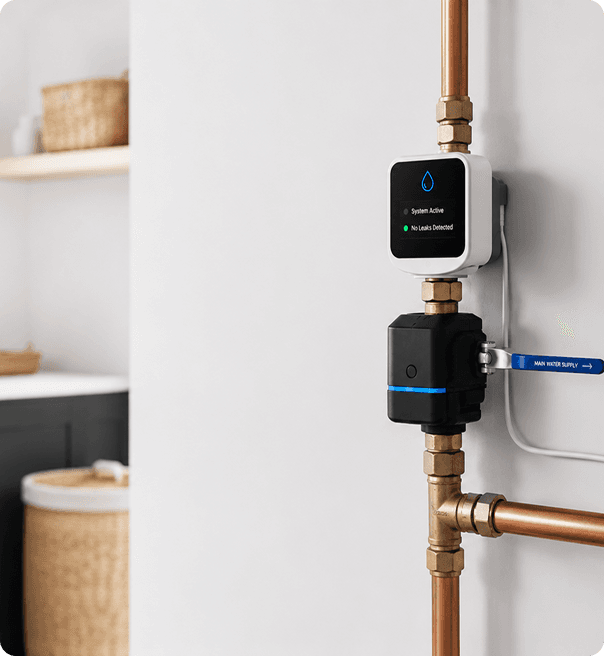
Traditional leak detectors typically alert you only after water reaches a sensor. A whole-home smart water leak detection system can take protection further by monitoring water flowing through the home’s main supply line. Depending on the system and configuration, smart water monitoring can provide:
- Continuous water-flow monitoring
- Unusual water-use detection
- Smartphone leak alerts
- Automatic water shutoff
- Water usage tracking
- Remote system monitoring
- Protection while you’re away from home
- Early warning of potential plumbing problems
A professionally installed smart home water leak detection system gives homeowners another layer of protection against leaks that might otherwise go unnoticed for hours or days.
How Smart Water Leak Detection Works
A whole-home smart water monitor is typically installed on the main water supply line entering the property. The system monitors characteristics such as water flow, usage patterns, and—in some systems—pressure. Over time, compatible devices can identify unusual activity that may indicate a leak. For example, a system may detect continuous or unexpected water use associated with:
- Leaking toilets
- Dripping faucets
- Broken supply lines
- Washing machine hose failures
- Water heater leaks
- Hidden plumbing leaks
- Irrigation problems
- Burst pipes
When abnormal activity is detected, the system can send an alert to the homeowner. Compatible systems equipped with an automatic shutoff valve may also close the home’s water supply when conditions indicate a significant leak.
Smart Home Water Leak Detection
Smart home water leak detection combines plumbing protection with connected-home technology. Instead of discovering a leak because you see water on the floor, receive a high water bill, or notice property damage, a smart system can provide earlier notification of unusual water activity. This can be especially useful for:
- Frequently traveling homeowners
- Vacation and second homes
- Rental properties
- High-value homes
- Homes with older plumbing
- Properties with finished basements
- Homes undergoing smart-home upgrades
- Homeowners concerned about hidden leaks
A smart home leak detection system can also help homeowners better understand how water is being used throughout the property.
Automatic Water Shutoff Valve Systems
Leak detection is valuable, but automatically stopping the flow of water can provide an additional level of protection. An automatic water shutoff valve system combines monitoring with a motorized valve installed on the main water line. When a compatible system identifies conditions associated with a major leak, it can automatically close the valve. This is particularly valuable when nobody is home to respond to an alert. A smart home water monitoring alarm and automatic shutoff system can therefore perform three important functions:
- Monitor water usage.
- Alert you to potential problems.
- Automatically shut off the water when supported conditions are detected.
System capabilities vary by manufacturer and configuration, so our plumbers can help determine which features are appropriate for your property.
Flo by Moen Installation
Flo by Moen is a popular whole-home smart water monitoring and shutoff solution. A Flo Smart Water Monitor and Shutoff is installed directly on the home’s main water supply line, allowing the system to monitor water usage and provide automatic shutoff capabilities.Sequoia Plumbing & Mechanical provides professional Flo by Moen installation throughout the San Francisco Bay Area.Professional installation can include:
- Evaluating the main water line
- Determining an appropriate installation location
- Confirming system sizing
- Shutting off and preparing the water line
- Installing the device
- Making necessary plumbing connections
- Checking the installation for leaks
- Restoring water service
- Testing basic system operation
Proper installation is especially important because the device becomes part of your home’s primary water supply.
Moen Flo Smart Water Monitor Installation
A professional Moen Flo Smart Water Monitor installation begins with evaluating the home’s existing plumbing. The installer must consider factors such as:
- Main water line size
- Pipe material
- Available installation space
- Device accessibility
- Nearby power availability
- Existing valves and plumbing configuration
- Manufacturer installation requirements
Depending on the existing plumbing, modifications may be necessary to properly integrate the device into the main water line. Once installed, homeowners can configure the applicable connected features and monitoring options through the manufacturer’s system.